Asphalt Cold Patch in College Station
Asphalt Cold Patch in College Station, TX
We serve College Station and nearby areas with fast asphalt cold patch repairs
We provide asphalt cold patch repair services throughout College Station, TX, including neighborhoods like Castlegate, Pebble Creek, Edelweiss Gartens, and Southern Pointe, as well as commercial properties along Texas Avenue, Harvey Mitchell Parkway, and the Earl Rudder Freeway corridor. Whether you need a quick pothole repair on a residential driveway or a more involved parking lot repair at a commercial property, we can typically get to your site quickly and get the work done with minimal disruption to your day.
Potholes and damaged pavement are a real problem worth fixing sooner rather than later
If you have a pothole, depression, or cracked pavement that has been sitting unaddressed, you already know it tends to get worse over time, not better. Water gets in, the base weakens, and what started as a small problem becomes a larger and more expensive one. A well-placed pavement patch using quality cold mix asphalt can stop that cycle before it gets out of hand. Asphalt repair using a cold patch asphalt method is one of the most practical and cost-effective ways to address this kind of damage, especially when a full asphalt resurfacing project is not yet needed. Understanding bituminous patch material is an important part of choosing the right repair approach, and we walk you through that so you know exactly what is going into your pavement and why.
We know College Station roads, neighborhoods, and weather conditions well
Our team has spent over 10 years working on asphalt maintenance and road repair projects throughout College Station and the surrounding Brazos Valley. We are familiar with how the local Blackland Prairie soil, specifically the expansive Houston Black Clay and Vertisol subgrade common in this area, affects how pavement settles, cracks, and fails over time. College Station summers are hot and humid, and the freeze-thaw cycles we do get in winter can open up cracks and weaken pavement edges faster than many property owners expect. We have worked on driveways in Woodcreek, access roads near Lick Creek Park, and commercial lots along Wellborn Road and Rock Prairie Road. That local experience shapes how we approach every driveway repair and road surface repair job we take on here.
Common questions College Station property owners ask about asphalt cold patch
Property owners and managers across College Station frequently ask us whether a temporary patch will actually hold up, how a cold asphalt mix compares to hot-mix paving, and when it makes sense to patch versus resurface entirely. These are fair questions, and the answers depend on the size of the damage, the condition of the surrounding pavement, and how the area is used. A properly installed permanent pothole patch using the right all-weather patch material and compacted correctly with a vibratory plate compactor can last for years under normal conditions. The quality of the prep work and the material used matters a great deal, and that is something we take seriously on every job. To understand why, it helps to start with the basics of what asphalt cold patch actually is and how it works.
What Asphalt Cold Patch Is and How It Works
A Simple Explanation of Cold Patch Asphalt Material
Cold patch asphalt is a pre-mixed repair material that comes ready to use straight from the bag or container. Unlike hot-mix asphalt, it does not need to be heated before placement. The mix typically contains aggregate and an asphalt emulsion or petroleum solvent flux that keeps the material workable at normal temperatures. Products like UPM Cold Patch and materials meeting Type IV Cold Mix Asphalt standards are common choices for pothole repair, driveway repair, and parking lot repair in College Station, TX. We use material suited to local conditions, including the heavy clay soils found across the Blackland Prairie that runs through much of Brazos County. Those soil conditions put extra stress on pavement edges and joints, so using the right patching compound from the start matters.
How Cold Patch Differs from Hot-Mix Asphalt
Hot-mix asphalt is produced at high temperatures and must be placed and compacted quickly before it cools. Cold mix asphalt, by contrast, stays workable for much longer. That flexibility makes it a practical choice for asphalt crack repair, road repair, and utility cut repair where immediate access to a hot-mix plant is not available or practical. The trade-off is that cold patch asphalt generally cures more slowly and relies heavily on proper compaction and surface prep to perform well over time. We use a Vibratory Plate Compactor or Walk-Behind Roller to compact patches to the right density, which keeps the repair from sinking or raveling under traffic. A blacktop patch that is not compacted correctly will fail faster, regardless of which material is used. That is why surface patching done by a trained crew tends to last longer than a rushed repair using the same materials.
Understanding what cold patch is and how it works makes it easier to decide when it fits your situation. The next step is knowing which repair scenarios actually call for it on properties like yours in College Station.
When Cold Patch Is the Right Choice for Your Property
Not every pavement problem needs a full replacement or major asphalt resurfacing project. In many cases, a well-installed cold patch asphalt repair is the most practical and cost-effective solution available. Knowing when cold patch makes sense can save you time, money, and a lot of unnecessary disruption to your property.
Situations Where Cold Patch Makes Practical Sense
Pothole repair is one of the most common reasons property owners in College Station reach out to us. When a pothole opens up in a parking lot off Texas Avenue or a driveway in Castlegate, waiting on a full paving crew is not always realistic. Cold mix asphalt can go down quickly, bonds without requiring high heat, and holds up well under normal traffic conditions. It is also a reliable option for utility cut repair after underground work has been done, since it allows the surface to be restored without a long wait.
College Station sits on Blackland Prairie soil, which includes expansive Houston Black Clay. This type of ground shifts with moisture changes throughout the year, and that movement puts ongoing stress on pavement edges and low spots. A pavement patch using cold mix material gives the surface some flexibility to respond to those conditions without cracking right away. For localized damage on driveways in neighborhoods like Pebble Creek or parking areas near the Harvey Mitchell Corridor, asphalt crack repair and targeted patching often handles the problem without disturbing the rest of the pavement.
Cold patch is also a practical tool for asphalt maintenance during cooler months or rainy stretches when hot-mix plants may not be running. Products like UPM Cold Patch are designed to cure and compact even in wet conditions, which matters here during the wet season when pavement damage tends to get worse quickly if left unaddressed.
Properties and Surfaces That Benefit Most From Cold Patch Repairs
Parking lots, private driveways, access roads, and service drives are all well-suited for cold patch asphalt repairs. Property managers handling commercial spaces near Research Valley or around Wolf Pen Creek often use this approach to keep surfaces safe and functional without shutting down operations. Residential driveways in subdivisions like Woodcreek or Edelweiss Gartens benefit from the same approach when damage is contained to one area.
Surfaces that carry moderate traffic, show isolated potholes, or have damage from road surface repair activity nearby are strong candidates for this method. A blacktop patch placed correctly at the right compacted depth can last for years, especially when the base underneath is still solid. If the damage runs deeper or covers a wide area, we will let you know whether a permanent pothole patch or a more involved repair is the better path forward.
Understanding what type of repair fits your situation is the first step. Once that is clear, the way we actually prepare and place the material makes all the difference in how long the repair holds.
A few years back, we got a call from a property manager over near Texas A&M University who needed a cold patch repair done on a badly damaged parking lot. The lot had several deep potholes that had been letting in water, and the freeze-thaw cycles we sometimes get here in College Station had made things a whole lot worse. We figured it would be a straightforward job, but it turned out to be one of the more challenging repairs we had tackled in our years working in Brazos County.
When we showed up on site, we quickly noticed that the base beneath the damaged areas had eroded more than it looked from the surface. In asphalt work, a weak base means your cold patch material will not hold up the way it should. If we had just filled the holes and called it done, you would have been back to square one within a few months. That was not something we were willing to let happen.
We had to take extra time to clean out each pothole down to a stable layer, remove all the loose debris, and make sure the edges were firm before we ever placed the cold patch mix. We also had to work around the property's heavy daily traffic, which meant staging our work in sections so the lot could stay partially open. It added time to the job, but it was the right way to handle it.
By the end, the repairs held up solidly through the rest of that season and beyond. That job reminded us that with over 20 years of combined experience in asphalt and concrete work, and more than 10 years serving College Station, the most important thing we can offer you is honesty about what a job actually needs, even when that means doing more than the minimum.
What Our Cold Patch Repair Process Looks Like
When a pothole or crack shows up in your driveway or parking lot, the fix is only as good as the process behind it. We have seen plenty of failed patches around College Station that came apart within a few weeks because the prep work was skipped or the wrong material was used. With over 20 years of combined experience in asphalt repair and more than 10 years working specifically in this area, we follow a consistent process that gives cold patch repairs a real chance to hold up.
How We Prepare the Damaged Area Before Patching
Preparation is where most DIY and budget repairs go wrong. Before we apply any cold patch asphalt, we start by cutting or sawing clean edges around the damaged area so the patch has a solid boundary to bond against. Ragged, crumbling edges will not hold. We then remove all loose material, standing water, and debris from inside the repair zone using an air compressor blower. This matters especially here in College Station, where the underlying soil is often Houston Black Clay, a type of expansive clay subgrade common across the Blackland Prairie region. That soil moves with moisture changes, and any water left under a patch speeds up failure. For deeper repairs, we dig down to stable material, which sometimes means working to a 4-inch or 6-inch base repair depth before we even think about patching. We also apply a tack coat emulsion to help the cold mix bond to the surrounding pavement.
How We Apply and Compact the Cold Patch Material
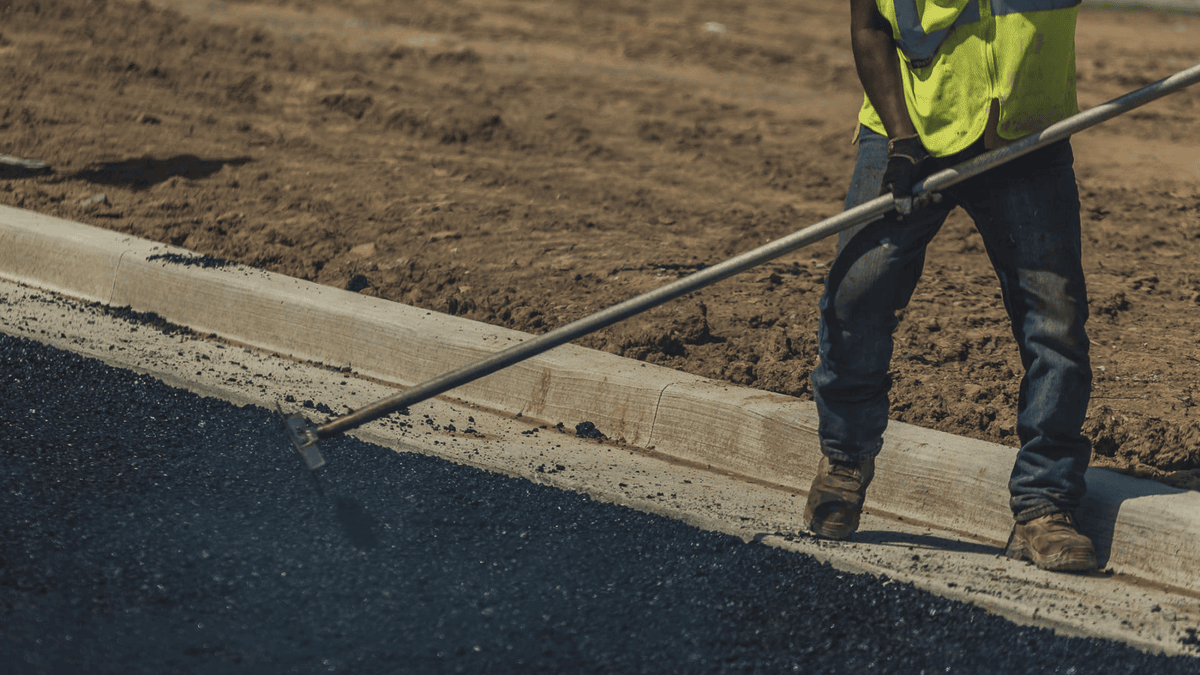
Once the area is clean and prepped, we place the cold mix asphalt in lifts rather than dumping it all in at once. Placing material in layers and compacting each one gives us a tighter, more uniform repair. We typically work toward a 2-inch compacted depth for surface-level pothole repair, though deeper voids may require additional base material first. For compaction, we use a vibratory plate compactor or a walk-behind roller depending on the size of the patch. Proper compaction is one of the biggest differences between a patch that lasts and one that sinks or ravels within a season. We target around 95% compaction density and finish the surface flush with the surrounding pavement to avoid trip hazards and drainage problems. Products like UPM Cold Patch perform reliably in the heat and rain conditions we see along the Harvey Mitchell Corridor and other high-traffic areas around town.
Getting the repair placed and compacted correctly is only part of the picture. How long that patch actually holds depends on a few factors that are worth understanding before you decide on a repair approach.
How Long Asphalt Cold Patch Lasts and What Affects Its Life
Realistic Expectations for Cold Patch Durability
When you use cold patch asphalt for a pothole repair or driveway repair, the results can range from a few months to several years depending on how the work is done. A properly prepared and compacted patch using a quality material like UPM Cold Patch or a Type IV Cold Mix Asphalt can hold up well under regular traffic. That said, cold mix asphalt is not the same as a full hot-mix repair, and it helps to go in with a clear picture of what you are getting.
For low-traffic areas like a residential driveway in Pebble Creek or a small parking lot near the Wolf Pen Creek corridor, a well-installed permanent pothole patch can last two to five years or longer. In higher-traffic situations, such as along Texas Avenue or Harvey Mitchell Parkway, a blacktop patch may serve more as a reliable temporary patch until a fuller repair like asphalt resurfacing makes sense.
Factors in College Station That Can Affect How Long the Repair Holds
College Station sits in the Blackland Prairie region, where Houston Black Clay soil is common. This Vertisol soil shifts and swells with moisture changes, which puts extra stress on pavement from below. That movement alone can shorten the life of any pavement patch if the base is not properly addressed first.
Beyond soil conditions, a few other things play a direct role in how long your repair lasts:
- Surface prep: We always clear out loose debris and moisture before placing material. Skipping that step is one of the most common reasons a cold asphalt mix repair fails early.
- Compaction: Using a Vibratory Plate Compactor or Walk-Behind Roller to reach close to 95% compaction density makes a real difference. Hand tamping rarely achieves that.
- Patch depth: A road repair that calls for a 4-inch compacted depth will hold better than one placed too thin.
- Drainage: Water pooling around a repair speeds up deterioration. We make sure the patch does not block natural water flow or create low spots.
- Traffic load: A parking lot repair that sees heavy trucks, like deliveries near Century Square or Research Valley, will wear faster than a lightly used access road.
- Weather cycles: College Station summers push temperatures well above 90 degrees, while winter rain and occasional freezes put added stress on pavement. Using a material with a Polymer-Modified Binder or Anti-Stripping Additive helps the patch hold up through those swings.
Understanding these factors helps you make a smarter call about whether a surface patching repair is the right fit for your situation or whether a different approach would serve you better. That comparison is worth looking at closely.
Cold Patch Versus Other Asphalt Repair Options
Comparing Cold Patch to Hot-Mix Patching and Full Replacement
When you have a pothole, crack, or damaged section of pavement, there are a few ways to address it. Understanding the differences between your options helps you make a smart decision based on your budget, timeline, and how long you need the repair to last.
Cold patch asphalt is a pre-mixed material that can be placed and compacted without heating. It works well for pothole repair, utility cut repair, and smaller damaged areas where a quick, cost-effective fix is needed. Products like UPM Cold Patch use a polymer-modified binder that holds up better than basic bag mixes, especially given the heat and clay soils common to College Station. Because it does not require heating equipment, we can place cold mix asphalt in more situations, including cooler weather or tight spaces where larger equipment cannot reach.
Hot-mix asphalt patching is a step up in durability. It uses heated material and is better suited for larger repairs or areas with heavier traffic. When we need a longer-lasting road repair on something like a parking lot repair along the Harvey Mitchell Corridor or a driveway in Castlegate, hot-mix is often the stronger choice. It bonds more firmly to the surrounding pavement and compacts to a tighter density, typically reaching 95% compaction density when done correctly.
Full-depth removal and replacement is the most thorough option. It addresses failing base material, such as the expansive Blackland Prairie clay soils found throughout College Station, which can shift and cause pavement to crack or sink over time. If the subgrade itself has failed, no surface patching alone will hold up. Full replacement means we remove the damaged section down to a proper base repair depth and rebuild from the ground up.
Helping You Decide Which Repair Option Fits Your Situation and Budget
For small, isolated damage like a single pothole or a pavement patch on a low-traffic driveway, cold patch asphalt is usually a practical and affordable starting point. It gets the area safe and stable without the cost or disruption of a larger project. On roads near Texas A&M University or busy parking lots along Texas Avenue, where traffic volume is higher, we would likely recommend hot-mix or a permanent pothole patch for better longevity.
If you are managing a property and dealing with widespread cracking, recurring damage, or base failures showing up in multiple spots, asphalt resurfacing or full replacement may save you more money over time than repeated patching. We can assess the condition of your pavement and walk you through what we see before any work begins. That way, you are making a decision based on what your pavement actually needs, not just what is quickest or cheapest in the short term.
Serving College Station Driveways and Parking Lots
We are a local asphalt and paving contractor serving College Station, TX and the surrounding Brazos Valley area. Our team has over 20 years of combined experience in asphalt and concrete work, and we have been working right here in College Station for more than 10 years. That means we know the local soil conditions, the Texas heat, the heavy summer rain, and how all of it affects pavement over time.
When asphalt breaks down here, it usually comes down to a few common causes. The intense heat softens and oxidizes the surface. Heavy rain pushes water into small cracks and weakens the base underneath. And regular traffic, whether from cars in a driveway or trucks in a parking lot, adds up fast. We have seen these patterns play out on driveways, parking lots, and commercial properties all across College Station, and we know what it takes to fix them the right way.
Whether you need a new driveway, a repaired parking lot, sealcoating to protect your surface, or crack filling before small problems grow into bigger ones, we handle it all. We work with homeowners, property managers, and business owners, and we treat every job the same way: with honest assessments, proper materials, and work that is built to hold up in this climate.
When you reach out to us, you are not getting a call center or a company from out of town. You are getting a local crew that has spent years working on properties just like yours, right here in College Station.
Why Work With Us for Asphalt Cold Patch in College Station
Now that you have a clearer picture of how cold patch compares to other asphalt repair options, the next step is finding a team you can trust to do the job right. Not every contractor understands the local conditions here in College Station, and that gap in knowledge often leads to repairs that fail too soon.
Our Experience and Local Knowledge Working in College Station
We have over 20 years of combined experience in asphalt and concrete work, including more than 10 years serving property owners right here in College Station. We know how the Blackland Prairie soil and expansive clay subgrade under many local driveways and parking lots can shift with moisture, which puts extra stress on pavement repairs. From the Harvey Mitchell Corridor to Rock Prairie Road and neighborhoods like Castlegate and Pebble Creek, we have seen firsthand how local weather and soil conditions affect how a cold patch asphalt repair holds up over time. That local knowledge shapes every repair we make.
What You Can Expect When You Hire Us for Cold Patch Repairs
When you bring us in for pothole repair, driveway repair, or parking lot repair, here is what sets our work apart:
- We clean out all loose debris, moisture, and failing material before placing any cold mix asphalt, so the patch bonds correctly and lasts longer
- We use quality materials suited for Texas heat, rain, and traffic, including options like UPM Cold Patch and Type IV Cold Mix Asphalt
- We compact every repair properly using equipment like a Vibratory Plate Compactor or Walk-Behind Roller, which reduces future sinking and raveling
- We protect drainage so water does not pool around your repair and cause more damage
- We work efficiently to keep disruption to your driveway, lot, or access road to a minimum
- We deliver a clean, flush finish that improves curb appeal and reduces liability risk for property owners and managers
- We bring over a decade of local experience in College Station, which means we understand how conditions here affect pavement patch performance
- We give you dependable results the first time, which means fewer repeat repairs and lower long-term maintenance costs
Whether you need a temporary patch to stop damage from spreading or a longer-lasting permanent pothole patch for a busy parking lot near Texas A&M University, we are ready to help. Get your free quote today by calling us directly or completing the form below.
College Station Paving Pros
1701 Southwest Pky
College Station, TX 77840
Business Hours
| Mon | 8:00 AM – 8:00 PM |
| Tue | 8:00 AM – 8:00 PM |
| Wed | 8:00 AM – 8:00 PM |
| Thu | 8:00 AM – 8:00 PM |
| Fri | 8:00 AM – 8:00 PM |
| Sat | 9:00 AM – 7:00 PM |